Everything you need to know about search engine optimization
What SEO actually means
Search engine optimization is the work of making your website easy for Google to find, understand, and rank. That sounds simple, but it hides a lot of scope, which is why two SEO quotes can differ by thousands of dollars while both honestly call themselves SEO.
In practice, SEO is four different jobs that all matter: technical SEO, which makes your site readable to search engines; on-page SEO, which makes each page clearly about something; local SEO, which puts you on the map for nearby searches; and content, which gives Google reasons to rank you in the first place. A provider doing only one of these and calling it complete SEO is the most common source of disappointment in this industry.
How Google actually finds and ranks a page
Everything in SEO makes more sense once you know the pipeline. Google runs three separate jobs: crawling, where its bot (Googlebot) follows links and sitemaps to discover pages; indexing, where it renders the page, figures out what it is about, and decides whether to store it; and ranking, where it answers a search by ordering the pages it has indexed. A page has to survive all three stages to appear in results.
Each stage can fail independently, and each failure looks the same from the outside - the page does not show up. A page blocked in robots.txt may never get crawled. A page that gets crawled can still be skipped at indexing if Google decides it is thin, duplicated, or not worth storing. And an indexed page can still rank on page nine forever. This is why "Google cannot find my page" and "Google found my page but nobody sees it" are different problems with different fixes.
Two details worth knowing here. First, robots.txt controls crawling, not indexing - a blocked page can still appear in results as a bare link if other pages point to it, so blocking is not a privacy tool. Second, Google does not index everything it finds anymore. It has become choosier about what it stores, which is one more reason thin, templated pages struggle while pages with real substance get indexed fast.
Search intent and keywords: what people actually type
Every search has an intent behind it, and matching it is most of on-page SEO. The four buckets: informational (the searcher wants to learn - "how much does a water heater cost"), navigational (they want a specific site - "ctrl shift run"), commercial (they are comparing - "best web designers near me"), and transactional (they are ready to act - "book a consultation"). A page that mismatches intent rarely ranks well, because Google has learned which page types satisfy which queries.
This is why a services page will not rank for a how-to question, and a how-to article will not rank for a hiring query. Look at what already ranks before writing anything - if the results are guides, write a better guide; if they are service pages, write a better service page. Fighting the intent of a query is fighting Google's entire understanding of it.
Keyword research in practice is less exotic than the tools make it look. Start from the questions real people ask you. Google's own autocomplete, People Also Ask boxes, and related searches are free research showing exactly how people phrase things. Search Console, covered in the measurement section, shows queries you already appear for - often the cheapest wins available, because a page sitting at position 11 usually needs refinement, not a rewrite.
And a word on the long tail: most searches are specific multi-word phrases, not the head terms everyone imagines competing for. "Emergency plumber clearwater sunday" has a fraction of the volume of "plumber", but far clearer intent and far less competition. Thousands of specific phrases together move more than one trophy term, and they convert better because the searcher knows what they want.
Technical SEO: the foundation under everything
Technical SEO is the plumbing. It does not make you rank by itself, but without it the rest of the work leaks away. The essentials are unglamorous: your pages must be crawlable and indexable, which means a sensible robots.txt, no accidental noindex tags, and canonical URLs that point to the real version of each page.
Then there is structure. A sitemap tells Google what exists and when it changed. Descriptive URLs tell both Google and humans what a page is about before they open it. Structured data - the JSON-LD schema markup in your page source - tells Google exactly what the site is about: the name behind it, what it offers, where it operates, its reviews, and its articles, in a format it can use directly in search results.
Most technical problems are invisible to visitors and invisible to owners, which is exactly why they go unfixed. A site can look beautiful and still tell Google nothing, or worse, tell it conflicting things. This is also the part most template platforms handle poorly, because the technical settings are either locked away or scattered across plugins.
Page speed is part of SEO, not a bonus
Google has confirmed that page experience signals, including Core Web Vitals, are part of how it evaluates pages. Speed is not the biggest ranking factor - relevance still wins - but it is a real one, and it matters even more for the humans on the other end. A site that loads slowly bleeds visitors before Google ever gets a say.
The measurement tool here is PageSpeed Insights, and the metrics that matter are the Core Web Vitals: how fast the main content appears, how quickly the page responds to a tap, and how stable the layout stays while loading. We wrote a full guide to how PageSpeed Insights and Lighthouse scoring work, including the new agentic browsing category, if you want the details.
For SEO purposes, the practical takeaway is simple: a fast site is a baseline expectation, not a premium feature. Heavy templates, uncompressed images, and stacks of third-party scripts are the usual culprits, and they are all solvable with a build that treats speed as a requirement from day one rather than a cleanup project later.
Titles and descriptions: your storefront in the results
Before anyone reaches your site, they see your title link - the blue headline in search results - and the description beneath it. These two lines of text are your ad copy in the results page, and they are also a direct on-page signal, which makes them the highest-leverage few words on any page.
The title should say what the page is and who it is for, in roughly 50 to 60 characters before truncation, and every page needs its own. "Web design and development | Ctrl Shift Run" tells Google and the searcher something; "Home" tells them nothing. Put the page's actual job first and the brand second - searchers scan for their question, not your name.
The meta description is not a direct ranking factor, but it heavily influences whether someone clicks, which is the whole point. Keep it around 150 to 160 characters, write it as an answer teaser rather than a slogan, and make each one specific to its page. One honest caveat: Google rewrites both when it thinks it can do better, often pulling a snippet from the page that matches the query. That is not a failure - it means the description is a suggestion, not a contract, and it is one more reason the body copy needs to be specific.
On-page SEO: every page needs a job
On-page SEO is the discipline of making each page clearly about one thing. The page title - the blue link in search results - should say what the page is and who it is for. The H1 should match the page's actual topic. The content should answer the question the searcher had when they typed it.
This is where most sites lose ground without knowing it. A homepage that tries to rank for everything ranks for nothing. A services page that lists ten offerings in bullet points gives Google nothing to work with. The fix is unglamorous: each offering or topic gets its own page, each page targets the search it should win, and internal links connect related pages so Google understands the structure.
Keyword stuffing is the failure mode to avoid here, and it is worth saying plainly: repeating a phrase forty times does not rank a page, it just makes it unreadable. Google is good at synonyms and intent now. The job is to cover a topic thoroughly and clearly, the way this article tries to, not to hit a keyword quota.
Site structure and internal links
How your pages connect matters almost as much as what they say. A sensible structure looks like a tree: the homepage links to main sections, sections link to detail pages, and everything worth keeping is reachable within a few clicks. Descriptive URLs reinforce the structure - a path like /articles/search-engine-optimization tells Google and the reader what the page is before either opens it.
Internal links do three jobs at once. They help Googlebot discover pages - a page no other page links to is an orphan that may never get crawled. They tell Google what the target page is about through their anchor text - "our PageSpeed guide" teaches more than "click here". And they distribute authority: a strong page that links to a newer page passes some of its standing along.
This is why the articles on this site link to each other and to the service pages, and why every article links back to the index. It is not decoration - it is the plumbing that makes the content findable.
Structured data: telling Google exactly what things are
Structured data is the JSON-LD markup in your page source that labels entities rather than words. Instead of Google guessing that a string of digits is a phone number, schema markup states plainly: this is a LocalBusiness, this is its phone number, these are its service areas, this is an Article with this headline. It uses the shared vocabulary at schema.org, which all major search engines understand.
What it earns you is eligibility for rich results - the enhanced listings with review stars, article details, breadcrumb paths, and business information. Eligibility is the honest word: schema makes you a candidate, not a guarantee, and Google shows rich results only when it trusts the markup and the page behind it. Some types have been narrowed over time - FAQ rich results, for example, are now reserved for well-known authoritative sites, so marking up an FAQ is no longer a shortcut to a bigger listing.
For most sites the types that matter are Organization or LocalBusiness, Article, BreadcrumbList, and Product or Service where they genuinely apply. Validate with Google's Rich Results Test before shipping, and keep the markup truthful - schema describing things that are not on the page is a spam policy violation, and wrong schema is worse than none.
Image SEO: the quiet half of the page
Images carry more SEO weight than most owners realize, in two directions. First, they are usually the largest bytes on the page, so uncompressed photos are the single most common cause of slow load times - descriptive file names, modern formats like WebP and AVIF, correct dimensions, and lazy loading below the fold are image SEO as much as speed work.
Second, they are searchable content themselves. Alt text serves screen readers first - that is its job - but it also tells Google what the image shows, and file names like denver-kitchen-remodel.webp beat IMG_4021.jpg for the same reason. Google Images is a real search surface: for visually driven work like portfolios, products, and food, image results send genuine traffic.
Local SEO: the map pack is a different game
When a site targets a local area - a service business, a storefront, a local community - local SEO matters as much as organic ranking, sometimes more. The map results at the top of a local search pull primarily from a Google Business Profile, not from the website itself, and the ranking signals are different: proximity to the searcher, the completeness and accuracy of the profile, categories, and reviews.
The website supports the local effort rather than replacing it. The name, address, and phone number shown on the site must match the Business Profile exactly - Google cross-checks consistency across the web, and mismatches erode trust. Location pages that describe real work in real places help, while thin pages that swap a city name in and out do not.
Reviews are the local factor most directly under an owner's control, and they compound. A steady stream of real reviews beats a burst of fifty followed by silence. The playbook is simple: ask after good experiences, make the review link easy to find, and respond to what comes in.
Content: the part that keeps paying
Content is where SEO stops being maintenance and starts being acquisition. Every page that genuinely answers a question your audience asks is a new door into the site. A plumber's guide to water heater costs, a real estate team's neighborhood pages, an agency's honest article about what a website should cost - these rank because they are useful, and they convert because the reader arrived already interested.
The honest expectation: good content takes time to produce and months to rank. One strong article every few weeks beats a daily flood of thin posts, and a library built steadily over a year becomes a real asset - visitors arriving from searches you never paid for, at a cost-per-click of zero forever after.
This is also why the articles on this site exist. They are the same strategy we recommend to clients, applied to ourselves.
E-E-A-T: why Google cares who wrote it
Google's quality raters evaluate pages against a framework called E-E-A-T: experience, expertise, authoritativeness, and trust. The extra E for experience was added in 2022 - the idea that someone who has actually done the thing writes differently than someone summarizing other summaries. Rater feedback does not rank pages directly, but it trains and validates the systems that do.
In practice this shows up as proof, not claims. Experience looks like original photos, real projects, and specific details only a practitioner would know. Expertise looks like depth and accuracy that holds up against other sources. Authority is conferred from outside - citations, links, and mentions from other trusted sites. Trust is the foundation under all of it: accurate information, clear ownership of the site, real contact details, and secure pages.
Topics where bad information can hurt people - health, money, safety, what Google calls Your Money or Your Life - get held to a higher bar. Whatever the topic, the practical lesson is the same: content that could have been written by anyone, about anything, tends to lose to content that demonstrably could not.
Links and authority: the off-page half
Everything so far lives on your site. The other half of SEO is what other sites say about you, and the currency is the backlink - another website linking to yours. Links were Google's founding insight: a link is a vote, and votes from trusted sites count far more than votes from ignored ones. One link from a real news site, an industry publication, or an established local organization outweighs a hundred directory submissions.
Links are earned, mostly, by having something worth citing: original data, genuinely useful guides, tools, or a real-world relationship that produces a mention - a supplier page, a partnership, a sponsorship, local press. This is slow work, and it is why authority compounds over years rather than weeks.
The forbidden version is buying them. Paid link schemes, bulk link packages, and private blog networks violate Google's spam policies outright, and the penalty is not subtle - a manual action can remove pages or the whole site from results until it is fixed. A site offering five hundred backlinks for fifty dollars is selling exactly the links Google learned to ignore a decade ago, and sometimes worse than ignore.
SEO in the age of AI search
The biggest shift in search since featured snippets is already here. Google's AI Overviews - rolled out to all US searchers in May 2024 - answer questions directly on the results page, above every traditional result. Independent studies through 2025 found organic click-through rates dropping by a third to more than half on queries where an AI Overview appears, and zero-click searches now account for the majority of queries. Google's AI Mode pushes the same trend further.
The picture is not uniformly bleak, and the details matter. Sites cited inside an AI Overview tend to win a disproportionate share of the clicks that remain. Visitors who do arrive from AI-generated answers skew further along in their decision - they read the summary and still chose to come. Brand searches are growing as a share of queries, because a name someone already trusts is the one search AI cannot answer for them. And ChatGPT, Perplexity, and similar tools have quietly become real, if still modest, referral channels.
The response is not a new bag of tricks - it is the same fundamentals with higher standards. AI answers are assembled from pages that state things clearly, specifically, and with structure, so citation-worthy writing is exactly what good content already looked like. Brand-building matters more, because searches for your name bypass the AI layer entirely. And making your site machine-readable helps: this site publishes an llms.txt file and the AI-catalog metadata described in our PageSpeed and Lighthouse guide, which covers the new agentic browsing category in detail.
The practical takeaway for measurement: impressions can stay healthy while clicks fall, because your result may be feeding an AI answer that satisfies the searcher. Judge SEO by what arrives and converts, not by raw traffic alone - which is exactly what the next section is for.
How to measure SEO: Search Console and beyond
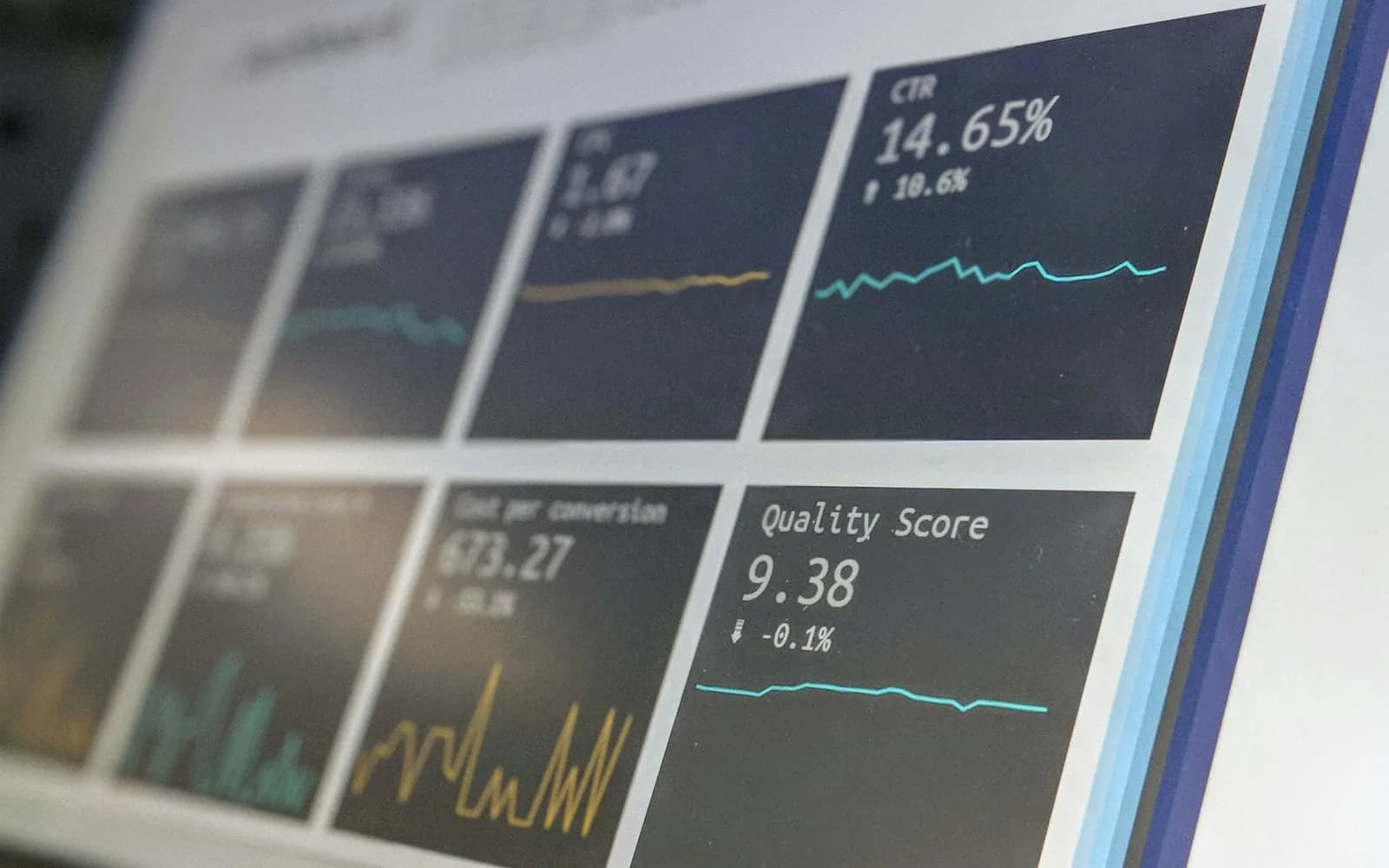
Without measurement, SEO is faith. The good news is that the essential tools are free, and the most important one is made by Google itself: Google Search Console. Verifying ownership takes minutes, and what it shows you cannot be bought anywhere else - it is Google's own report on how your site performs in Search.
The heart of it is the Performance report: four metrics - clicks (actual visits from search), impressions (times your result was shown), click-through rate, and average position - filterable by query, page, country, and device. It keeps about sixteen months of history, which is enough to see real trends. The branded-versus-non-branded filter added in 2025 is quietly one of the most useful views: branded queries measure your reputation, while non-branded queries measure your SEO doing its actual job - reaching people who were not looking for you by name.
Beyond Performance, a handful of reports do the diagnostic work:
- Page indexing - which pages are in the index and the specific reason others are not
- URL Inspection - a per-page check of index status and last crawl, with a request indexing button after you publish or update
- Sitemaps - submit yours and see when Google last read it
- Core Web Vitals - real-user speed data grouped by page, straight from the field data discussed in the PageSpeed article
- Links - who links to you and which pages attract them
- Manual actions and security issues - ideally empty forever; a manual action means a human reviewer penalized the site
Reading the numbers without fooling yourself
The metric hierarchy matters more than the tools. Conversions - calls, form fills, bookings, sales - are the only number that pays for anything, and Search Console cannot see them because they happen after the click. That is what Google Analytics is for: pair GSC's search visibility with GA4's on-site behavior and you can trace the path from query to phone call.
Impressions usually move first on a healthy site, then clicks follow as positions improve. Average position is the most seductive metric and the least meaningful alone - position one for a phrase nobody searches is worth nothing, and position fifteen for a valuable term can still be a win in progress. Watch for sudden drops rather than daily wiggles: a cliff usually means a technical break or an algorithm update, both of which need investigation rather than panic.
A simple rhythm works for most sites: check Performance monthly, inspect new pages when they publish, and investigate anything that falls off a cliff. Google dominates most markets, but Bing Webmaster Tools is a five-minute extra setup that covers the rest. And when a report seems to contradict what you expected, the cause is usually one of two things - the AI-driven shift described above, or a technical problem the indexing report will point at directly.
How long SEO takes
Nobody honest gives you a date, and you should be suspicious of anyone who does. The truthful answer is that meaningful movement usually takes months, not weeks - longer in competitive markets, faster for local searches in small areas. Technical fixes can show effects within weeks once Google recrawls. Content and local authority build over quarters.
SEO also never finishes, which is part of what ongoing SEO work pays for. Rankings drift as competitors publish, Google updates, and the site itself changes. The sites that win are the ones still doing reasonable things a year later, not the ones that sprinted for a month and stopped.
SEO myths that refuse to die
A short exorcism, because these come up in almost every conversation:
- The meta keywords tag has been ignored by Google since 2009 - adding it today only tells competitors what you are targeting
- There is no ideal keyword density - a phrase repeated forty times reads worse and ranks worse than a page that covers the topic naturally
- The duplicate content penalty is mostly a myth - Google consolidates near-identical pages rather than punishing them, and the real risk is it picking the wrong version to show
- More pages is not better - a dozen thin pages dilute a site where three substantial ones would strengthen it
- Buying ads does not boost organic rankings - Google's ad and ranking systems are deliberately separate
- Exact-match domain names carry almost no weight now - a memorable brand outperforms a keyword stuffed into a URL
- SEO is not dead - it has been declared dead for two decades while the tactics die and the discipline adapts; AI search is the latest round of exactly that
What SEO cannot do
SEO cannot guarantee a ranking, period, and any provider who promises one is telling you what you want to hear. Google does not sell placement, and nobody outside Google controls it. What good work does is remove every obstacle between your site and the rankings it deserves.
SEO also cannot produce leads tomorrow. If you need the phone ringing this week, that is what ads are for - Google Ads puts you at the top of the page today while SEO builds the position you will not have to pay for later. The two are complements, not competitors, and the right split depends on how quickly you need results.
DIY or hire someone
Much of the basics is genuinely learnable, and a motivated site owner can handle some of it:
- Claiming and completing a Google Business Profile, if the site targets a local area
- Collecting reviews consistently
- Writing accurate titles and descriptions for the main pages
- Publishing useful content about what you actually know
- Keeping any name, address, and phone number consistent everywhere they appear
What to ask an SEO provider
If you do hire someone, these questions separate real work from reports that look like work:
- What exactly will you change on my site, and can you show me before and after?
- How do you measure success - rankings, traffic, or actual leads?
- What happens to the work if I stop paying - does the content and the access stay mine?
- Can you explain your approach in plain language I could repeat back?
- What will you NOT do, and why - a provider with no boundaries is a warning sign
Next steps
Every site we build ships with the technical and on-page foundations done: clean structure, schema markup, real titles, fast pages, and a sitemap. If your current site needs that groundwork, start with our website development page. If you want to understand the speed side in depth, our PageSpeed Insights guide walks through every score. And when you are ready to talk about your site specifically, book a free call.